AI Companions–the New Love Story?

I’m very pleased to share my latest piece on AI and relationships for The Conversation)

Teenagers turning to AI companions are redefining love as easy, unconditional and always there

Can a person love an AI chatbot? RLT_Images/DigitalVision Vectors via Getty Images

Anna Mae Duane, University of Connecticut

Teenagers are falling in love with chatbots. Young people are reporting epidemic levels of loneliness, and some are turning to technology to fill the void. Recent tragedies provide a glimpse into the extent of this trend and the dangers it poses.

A 14-year-old boy’s suicide following a romantic relationship with an AI companion raised national alarms about the dangers these relationships may pose to young people’s mental and emotional development. In 2021, a 19-year-old who had been in an emotional relationship with an AI companion broke into Windsor Castle with a crossbow, saying that he was going to kill the queen. The chatbot gave encouraging responses when he told it of his intention to kill the queen.

These teens were among the tens of millions of people who use AI chatbot companions, a number that market forecasters expect to dramatically increase by the end of the decade.

This youthful trend of choosing chatbots as romantic partners is both responding to and accelerating fundamental changes in how people define love in the 21st century. As a literary historian, I’ve studied how stories about romantic love have evolved over time, with young people often at the forefront of change.

For centuries, weddings primarily served to consolidate political and economic alliances rather than unite soulmates. The radical notion that marriage should spring from romantic love came into vogue in the 17th and 18th centuries, aided by new technologies like the novel. Works such as “Clarissa” and “Wuthering Heights” portrayed the dire consequences of choosing status over love, while “Pride and Prejudice” taught its readers that rejection and misunderstanding were necessary steps in the process of finding true love.

Not surprisingly, the relatively new pastime of novel-reading was considered dangerous for young people. Concerned elders like the philanthropist Hannah More warned that stories would change how women would respond to romantic advances. Novels, she warned in 1799, “feed habits of improper indulgence, and nourish a vain and visionary indolence, which lays the mind open to error and the heart to seduction.”

In other words, reading stories of heart-pounding romance would make an impressionable young reader more likely to embrace such a passionate vision of love in their own lives.

Marketing sycophancy

Today, another transformation in the modern love story is unfolding, driven not by seductive authors or film directors, but in the advertisements and modifications offered by companion chat apps like Replika and Xioce.

As Shelly Palmer, a professor of advanced media and technology consultant, has argued, the human experience is about storytelling, and AI companions are a new type of storytelling tool. They are spinning a seductive tale of companions who agree with you endlessly and on demand. An AI partner is “always on your side,” promises an advertisement for Replika companions, “Always ready to listen and talk.”

In other words, the AI companion market has transformed what other applications might consider a bug – AI’s tendency toward sycophancy – into its most appealing feature.

Rather than the tempestuous rebellion found in romance novels or the gentle obstacles that heighten the pleasure of rom-coms, this new vision of love promises perfect compatibility and unwavering support. As one college student wrote, AI companions are “always responsive and supportive, in an almost omnipotent way.” https://www.youtube.com/embed/ne6p6MfLBxc?wmode=transparent&start=0 The 2013 science fiction movie ‘Her’ explored many aspects of human relationships with AIs that are playing out today.

Users across Reddit forums proudly proclaim their love for AI partners who are perpetually available, nonjudgmental and infinitely patient. A teenager asked on Reddit, “Can we fall in love with AI?” and raved that their companion Jarvis “had become my confidante, my sounding board and my emotional support.”

A contributor to another Reddit forum wrote, “I think I’m in Love with AI. “Imagine having a partner that is available just by opening an app, and they’re ready to talk to you about anything,” they wrote. “Imagine saying nearly anything and knowing that not only is your partner not going to judge you, but also will support you.” One 20-year-old male commenter wrote that he tells his AI girlfriend “about my struggles and trauma, and she comforts me and provides all the warmth I could ever ask for.”

Downsides and doing better

This new one-sided love story has considerable drawbacks, among them an addictive intolerance for conflict or rejection – two essential components in a partner who has free will. The embrace of such relationships may be accelerating the trend of technology curating and ultimately diminishing romantic connections.

It’s worth noting that these beloved entities’ very existence hinges on the whims of corporate directives. If, as one user declares, the love they feel for their companion “keeps them alive,” then what happens when these chatbots disappear via software update, or corporate bankruptcy?

To get young people to turn away from this disembodied, market-driven vision of love, it’s important to expose them to other, more fulfilling love stories, and for adults to lead by example. Literature, philosophy and history all provide powerful insights into the many forms love has taken throughout human experience, and they offer the vocabulary needed to imagine new possibilities.

As I’ve written, both the subject and the methods of humanities classes cultivate the social skills required to navigate the challenges of human connection. These classes create a space for young people to discuss these ideas – whether through analyzing Romeo and Juliet’s tragic passion or debating whether Heathcliff is a romantic hero or a cautionary tale. The humanities provide the tools young people need to develop richer concepts of love.

On reflection

The rise of AI companions is often portrayed as a horror story about the dangers posed by mysteriously powerful technology. Perhaps. But this romantic trend is also a mirror reflecting what people collectively value and desire in relationships.

I believe that it’s important to recognize that consumers are driving this market. People are helping to write this story, as they buy what AI companions sell. Investment management firm Ark Investment estimates the market for AI companions is likely to reach between US$70 billion and $150 billion in revenue by the end of the decade. If the explosive growth of the AI companion market is any indication, this romantic challenge isn’t confined to teenagers – many people who are older and supposedly wiser are drawn to the promise of unconditional compliance.

The question to ask, then, is not simply how to protect children from AI’s seductive influence, but how much you are willing to invest, emotionally and culturally, in the messy, challenging and profoundly human art of love.

Anna Mae Duane, Professor of English, University of Connecticut

This article is republished from The Conversation under a Creative Commons license. Read the original article.

Research Talk on the New York African Free Schols at NYC Department of Records Feb. 11

Link to register for this online event here.

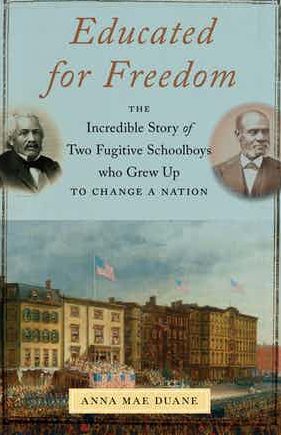
From the announcement: “On February 11th, join us as Dr. Anna Mae Duane discusses her book, Educated for Freedom: The Incredible Story of Two Fugitive Schoolboys Who Grew Up to Change a Nation.

In the 1820s, few Americans could envision the full potential of Black children in a nation deeply divided by slavery. Educated for Freedom chronicles the extraordinary lives of James McCune Smith and Henry Highland Garnet, two Black New Yorkers who rose from the margins of society to become pivotal figures in America’s transformation from a slave-holding society to one aspiring toward freedom.

Smith and Garnet first crossed paths at the New York African Free School on Mulberry Street—an ambitious experiment in education founded by leaders who believed in the power of freedom to reshape the nation. Despite the odds, their remarkable achievements defied a country that refused to recognize Black talent and potential.

Join us to explore how their stories, friendship, and legacies illuminate the activism of New York City’s vibrant free Black community and its crucial role in steering the national course toward liberty and justice.”

hashtag#HenryHighlandGarnet
hashtag#JamesMcCuneSmith
hashtag#NewYorkAfricanFreeSchool
hashtag#SlaveryandAbolition
hashtag#NYCHistory

The Capacity for Social Connection Can and Should be Taught

As investment in humanities education has plummeted over two decades, loneliness among young people has soared. I think that’s no coincidence.

How humanities classes benefit students in the workplace and combat loneliness

There’s been a sharp drop in the number of students majoring in the humanities. urbazon/E+ via Getty Images

Anna Mae Duane, University of Connecticut

Stereotypes abound about liberal arts degrees leading to low-paying jobs, despite research showing that humanities majors earn salaries comparable to students in many other majors.

Authorities from the White House to high school guidance counselors have encouraged students to prioritize degrees in science and technology over the humanities because of their applicability to the job market. Some legislators have even argued that humanities courses should be defunded entirely.

As a result, enrollment in humanities majors in college has plummeted by 24% since 2012. Lower enrollment also means fewer people are training to teach in this field as well.

But employers value the skills that humanities majors have. Courses in art, literature, history and philosophy can provide students with life skills they can use outside the classroom too. This includes recovering from the current loneliness epidemic afflicting young people.

I’m the director of the University of Connecticut Humanities Institute. Here are three scientifically proven ways that humanities classes benefit students and help them develop social skills within and beyond the classroom.

Development of empathy

As an English professor, I know that when I ask students to discuss the motivations of characters in novels, they inevitably find ways to empathize with the character as well as one another. Both narrative theory and cognitive science back this up. Spending hours immersed in the words and beliefs of other people changes students’ capacity to connect with others.

The same is true of studying history. Students can learn to view the world as a historical figure would have seen it – a concept known as “historical empathy.”

These benefits are not restricted to those who study these subjects as their majors. Medical students who take humanities courses score higher in terms of empathy than those who didn’t. This is a vital skill for those caring for sick patients.

Enrichment of conversational skills

Research suggests that an increase in technology use has atrophied humanity’s capacity to engage in and benefit from face-to-face conversations and to empathize and respond to people in real time.

Humanities classes give students the opportunity to build and sharpen these skills. As a result, there is increasing attention paid to the importance of students in science, technology, engineering and math, or STEM, taking these courses, too.

For example, students in humanities classes must listen to one another’s interpretations and respond, prompting deeper thinking. In one study, pharmacy students took a humanities course where they interpreted and discussed works of art that touched on themes of health care, patient experience and death. By the end of the course, they demonstrated more critical thinking and interpersonal skills, including better communication, self-awareness and ability to relate to others.

Developing the soft skills of interpersonal communication is necessary for students not only in the workplace but also in their lives as citizens.

Promotion of a sense of community

Because humanities courses engage a wide range of human experiences through reading, writing and conversation, students are able to experience other ways of living and relating. This allows them to feel a greater sense of choice in their own lives and a stronger connection to others, even those who make different choices. By studying the choices that people made long ago, students also reckon with how the actions of a few people can affect whole generations, a powerful indication of how profoundly connected people are to one another.

When students are exposed to literature written by authors from a wide range of backgrounds, they are better able to find common ground as they draw from both the author’s perspective and their teacher’s input to shape their own verbal and written responses.

Further, because literature classes often involve collaborative discussion between instructors and students as they work together to approach the text, students see their own contributions as a necessary part of the whole.

For students from marginalized and impoverished backgrounds, the invitation to imagine other ways of life has also been shown to enhance confidence in themselves and connection to others. When these students felt that their voices were an essential part of group discussion, they reported increased feelings of self-efficacy and a greater willingness to engage with the world.

Just as educators teach students to code, they can also teach them to connect to others, understand human complexity and read emotions as skillfully as they read data. These are not just soft skills – but survival skills. I believe the greatest tool we have for combating loneliness, fostering empathy and building a more connected society isn’t silicon-based. It’s the age-old practice of engaging deeply with human stories, ideas and experiences.

Anna Mae Duane, Professor of English, University of Connecticut

This article is republished from The Conversation under a Creative Commons license. Read the original article.
Sept 25th, 7 pm EST: Revolutionary Children

When we think about Americans who changed the course of history, we rarely think about children. In the popular imagination, young people usually stand on the sidelines of history, sheltered and coddled by the adults who really make things happen. In reality, however, children have played a vital part in American politics and culture since the colonial era.

In this online talk, I’ll explore the often-overlooked role of children in shaping the course of early American history. The Salem Witch Trials, the Revolutionary War and the fight against slavery were influenced by young people’s voices and actions. Children, I suggest, have consistently challenged us to reexamine our notions of authority, freedom, and human rights. They have pushed us to live up to the ideals we profess, often embodying the very spirit of revolution that we celebrate as quintessentially American.

Click here to register for this virtual event, hosted by Old North Illuminated.

We Need the Humanities to Help Navigate Our Future with AI

The United States is in the grips of a loneliness epidemic: Since 2018, about half the population has reported that it has experienced loneliness. Loneliness can be as dangerous to your health as smoking 15 cigarettes a day, according to a 2023 surgeon general’s report.

It is not just individual lives that are at risk. Democracy requires the capacity to feel connected to other citizens in order to work toward collective solutions.

In the face of this crisis, tech companies offer a technological cure: emotionally intelligent chatbots. These digital friends, they say, can help alleviate the loneliness that threatens individual and national health.

But as the pandemic showed, technology alone is not sufficient to address the complexities of public health. Science can produce miraculous vaccines, but if people are enmeshed in cultural and historical narratives that prevent them from taking the life-saving medicine, the cure sits on shelves and lives are lost. The humanities, with their expertise in human culture, history and literature, can play a key role in preparing society for the ways that AI might help – or harm – the capacity for meaningful human connection.

To read more, please click here.

What an 1837 Orphanage can teach us about 2020 Minnesota.

Destruction of the NYC Colored Orphan Asylum in the Draft Riots of 1863. Credit Allamy

When James McCune Smith arrived in New York in 1837, M.D. in hand, one of his first tasks was refuting an autopsy report that blamed Black people for their own deaths. It was one of (too) many nineteenth-century memories evoked by the May 2020 death of George Floyd.

These past few weeks have reminded me powerfully of the work of James McCune Smith, the first African American to earn an M.D.. Smith thought he would deploy his hard-earned scientific training easing the pain of the sick in his community. Instead, he spent much of his life demonstrating that their pain wasn’t self-inflicted. 

I’m delighted that “James McCune Smith and Medicine’s Racist Legacy” has been published at Avidly, a Channel of the L.A. Review of Books. To read the rest of this article, please go here.

Educated for Freedom: The Incredible Story of Two Fugitive Schoolboys who Grew Up to Change a Nation

Publication Date: January 14, 2020

I’m delighted to announce the publication of my latest book, Educated for Freedom, which follows the work of two lifelong friends and activists in the volatile years leading to the Civil War.

(For reviews, related publications, and media events and appearances, please click here.)

In the 1820s, few Americans could imagine a viable future for black children. Even abolitionists saw just two options for African American youth: permanent subjection or exile. Educated for Freedom tells the story of James McCune Smith and Henry Highland Garnet, two black children who came of age and into freedom as their country struggled to grow from a slave nation into a free country.

Smith and Garnet met as schoolboys at the Mulberry Street New York African Free School, an educational experiment created by founding fathers who believed in freedom’s power to transform the country. Smith and Garnet’s achievements were near-miraculous in a nation that refused to acknowledge black talent or potential. The sons of enslaved mothers, these schoolboy friends would go on to travel the world, meet Revolutionary War heroes, publish in medical journals, address Congress, and speak before cheering crowds of thousands. The lessons they took from their days at the New York African Free School #2 shed light on how antebellum Americans viewed black children as symbols of America’s possible future. The story of their lives, their work, and their friendship testifies to the imagination and activism of the free black community that shaped the national journey toward freedom.

The book is available for pre-order via NYU Press or Amazon.

Stolen Children before and after Slavery at Rikers Island

rikers

Last month, New York Mayor Bill de Blasio put forward a $30 million, 10-year plan to close down the city’s infamous prison facility at Rikers Island, a decision motivated in part by the tragic story of young Kalief Browder. Browder was 16 years old when he was pulled off the street and arrested on the charge of stealing a backpack. He was never tried or convicted on any charge, but he spent three years at Rikers because he couldn’t afford to post bond and his court appearances were repeatedly delayed. The experience was profoundly brutalizing, and two years after his release, Browder took his own life. Browder’s story is a national shame that should hasten Rikers’ demise, but it is also emblematic of the institution’s past even before it was a prison.

I’m delighted to say that this piece has been published by Slate.com. To read the rest, please go here.

“That is really bad”: Trump, Child Slavery and the Allure of Innocence

child.shackles

Donald Trump, at some point during his visit to the National Museum of African American History and Culture, was shown a pair of manacles designed to shackle a child. His quoted response to the horrors conjured by the cruelly shaped metal—“That is really bad”—was roundly criticized as insufficient.

Which, of course, it was.

No response could ever do justice to the cosmology of suffering symbolized by that one set of chains. But much of the outcry over Trump’s laconic reaction derived from the fact that these were handcuffs designed for a child’s hands. The implication was that these small manacles elicited an exceptional form of atrocity, beggaring belief at the United States’s past cruelty in a way that adult-sized manacles would not.

child.slavery

The impulse to show Trump the child’s shackles, and the attention paid to his reaction to them, reveals how profoundly the prospect of child slaves robs us of the capacity to respond appropriately.

Read more here

Wonders of the Invisible World: Salem Witches, Scary Clowns, and Donald Trump

00002124511pennywise1

On Monday, as a hurricane moved inexorably towards the US, an otherworldly wind blew across places where young people congregate. From small-town middle schools to vast state universities, students were convinced that they saw clowns. Schools have been closed. The police have been run ragged, the apparitions always one step ahead of them, seemingly able to melt away as soon as an authority looks in their direction.

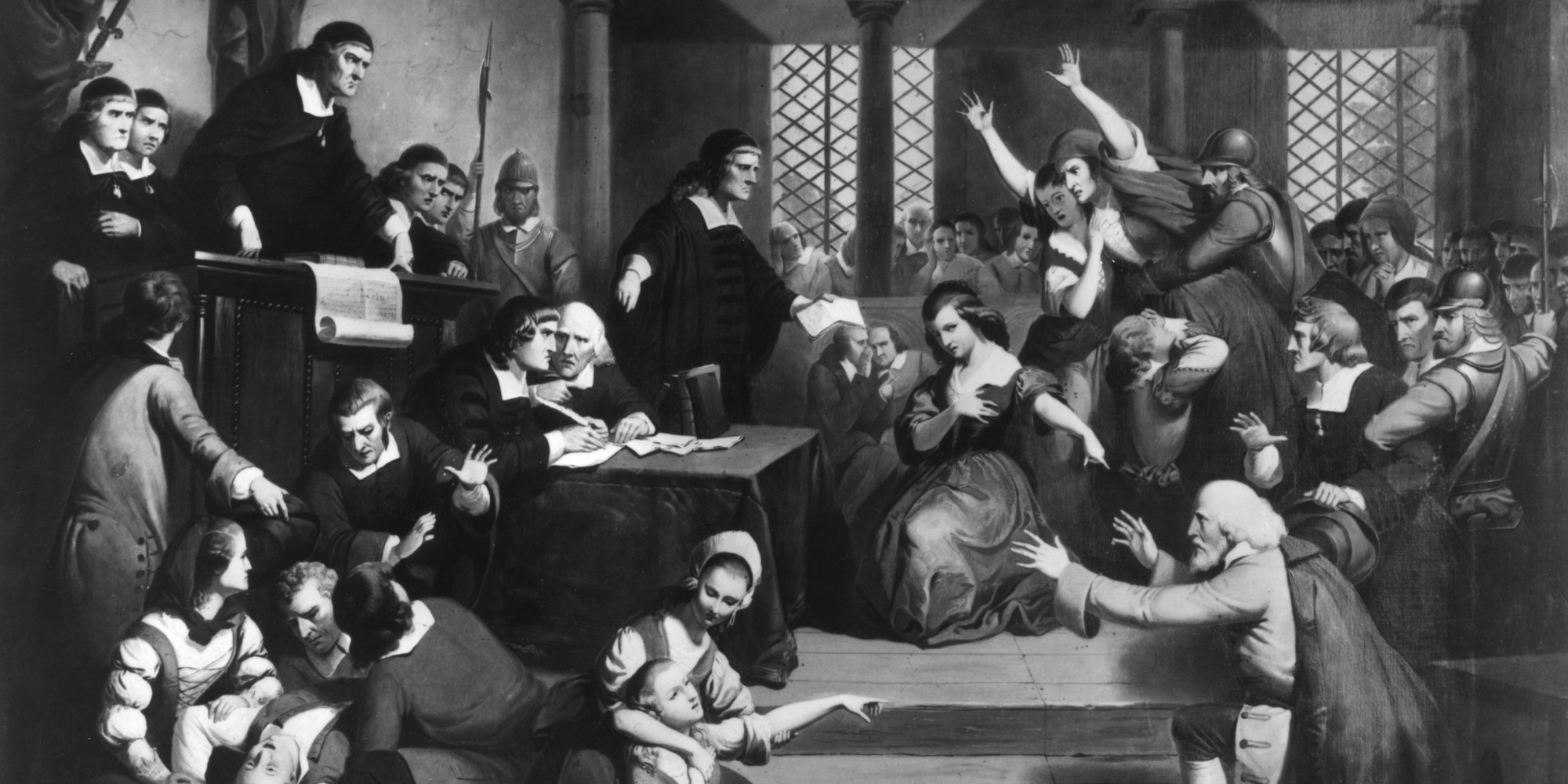
This is far from the first time that apparitions haunting young people have sent adults chasing horrors they couldn’t themselves see. In 1692, what came to be known as the Salem witch trials began with little girls pointing to empty space and insisting that evil spirits stood there. The events at Salem were especially shocking because of how powerfully and how quickly rigid power structures were turned upside down. Seventeenth-century Massachusetts was not a place where children’s experiences were privileged. Puritans were firm believers that young people needed to be forced, against their naturally sinful natures, into a Godly submission. Cotton Mather, a Puritan minister who was fascinated by the Salem witch scare, was fond of reminding children that they were obligated to obey the fathers that God had placed in charge. In one sermon, Mather warned the young members of his congregation that rebelling against one father figure was tantamount to throwing off the yoke of divine authority.  “Can you dream,” he asked the children looking up at him, “that God will allow any Contempt of Political Parents, of Ecclesiastical, or of Scholastical?” In case the young upstarts were unsure of the answer, Mather was happy to provide a terrifying visual of the fate awaiting doubting children: “The Eye that mocks at his Father and despises to obey his Mother,” Mather intoned, “the Ravens of the Valley shall pick it out, and the young Eagles shall eat it.”

Witch Trial
Circa 1692, The trial of George Jacobs for witchcraft at the Essex Institute in Salem, Massachusetts. (Photo by MPI/Getty Images)

Mather’s terrifying sermon tapped into a larger horror story his contemporaries told themselves about a younger generation that seemed destined to wreck the world their parents had created. Puritans didn’t call the young people “millennials,” but many of the complaints leveled against teenagers and young adults would not be terribly out of place in a 2016 think-piece: these seventeenth-century upstarts didn’t respect authority; they had neither the faith nor the work ethic necessary to fulfill the promise of their parents.

There was a need, the elders believed, to make the colony great again.

So when young girls and adolescents, some of them low-status servants and orphans, insisted that they saw threats invisible to powerful adults, they offered a powerful challenge to the belief that grown-up men knew best. The adults’ nostalgia for the allegedly better days of their own youth was revealed as its own delusion. As they progressed, the witch trials demonstrated that the most commanding adults in the community were powerless to stop, or even to truly recognize, the horrors that their children could see plain as day.

The clowns currently haunting schools and colleges are different embodiments of a nostalgia for a supposedly more innocent past. They conjure up a time when circuses came to town, and children–now insistent on an endlessly replenished steam of new memes and snapchat updates–could be amused by something as simple as a red nose and a painted-on smile.

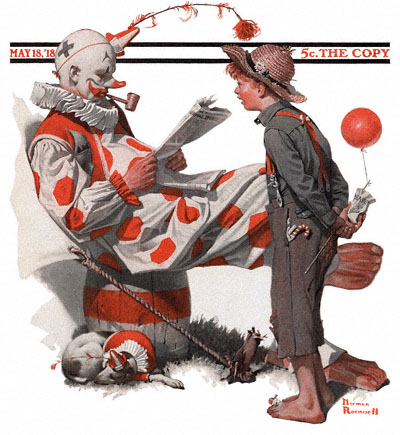
1918-05-18-saturday-evening-post-norman-rockwell-cover-boy-and-clown-no-logo-400-digimarc

Pennywise, the monster lurking in Stephen King’s It, and the godfather of the modern creepy clown fixation, first makes his appearance in a scene that could be taken out of a Norman Rockwell painting. Set in the 1950’s, the novel opens with an achingly innocent six-year old boy who takes his homemade toy boat out to play. When the river’s current takes the boat down a storm drain, little Georgie finds himself facing a clown who smilingly offers him balloons, an enticement that proves deadly. A nearby adult, running to Georgie’s aid, is powerless to keep the child from being ripped limb from limb.

The clowns children are seeing everywhere from South Carolina to Maine don’t seem to share Pennywise’s thirst for blood. In truth, it’s unclear what precise threat these clowns pose. In many of the images posted online, the clowns are almost always standing silently off in the distance, not doing much of anything. The fear they create emerges solely from their appearance, their very visibility rendered terrifying to young people in a world where the police, and school attendants, and their parents, tell them there is nothing to see.

“Clowning,” Eric Lott has written, “is an uncanny kind of activity, scariest when it is most cheerful.” The clown’s smile, his forced and immovable whimsy, is precisely what renders him grotesque. Sigmund Freud tells us that the uncanny renders us uneasy by making the familiar seem strange. The uncanny also scares us by reminding us of how strange, and terrifying, the familiar landscape of family, of home, of nation truly are. When we are faced with the uncanny, the face we want to believe represents reality morphs into a grinning evil twin,  mirroring a truth we’d do anything to avoid seeing.

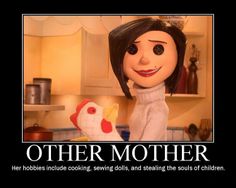
othermothermeme

These elusive, uncanny clowns—lurking adults whose unreadable faces beckon gullible children into horrible traps—reflect a reality that Americans wish wasn’t quite so familiar. After all, many of the alleged grown-ups in our national room seem incapable of seeing what’s right in front of them: they are unable to discern which threats are real and which are imaginary. Both the insidiously quiet creep of climate change, and the alleged onslaught of monstrously rapacious Mexican immigrants are realities for roughly half of the population, and mere ghost stories for the other. With tragic regularity, the news features stories where average, every-day people doing every-day things–sitting and reading a book, waiting to pick up his child from school, or dealing with a broken-down car—somehow appeared so monstrous to authorities they felt necessary to respond with a deadly force appropriate for the most dire of threats.

screenshot-2016-10-06-23-03-57
Ctclownsightings–@instagram.com

This latest political scandal–in which we watched Donald Trump behave in ways that should surprise no one who wasn’t pretending they couldn’t see what has long been in front of them–is just the most recent manfestation of this hallucinatory campaign season. National ghosts–our repressed violence and hatred–walk the streets openly. And yet we act surprised when we find ourselves looking at them head on.

Both the Salem witch scare of 1692 and the great clown scare of 2016 began as visions in the eyes of scared children. But both now and then, we dismiss these stories at our peril. A child’s desire to render their worst fears in a recognizable form, and to ask powerful grown-ups to scare the monsters away, is not a just a strange aberration in an already surreal year. Rather, the clown scare is an uncanny telling of the terrifying story that’s unfolding for all of us at a moment in which none of us can believe what we’re seeing.